The Mobile Media Toolkit helps you make sense of the growing role of mobile tech in media. The Toolkit provides how-to guides, mobile tools, and case studies on how mobile phones can (and are) being used for reporting, news broadcasting, and citizen media. We cover it all, from basic feature phones to the latest smartphone applications.
It's an exciting day for us here at MobileActive.org as we launch the Mobile Media Toolkit. For the last year we have been interviewing people, researching projects, and testing tools, to bring you this free resource. It is designed to help you evaluate and effectively deploy the right tools for reporting and sharing content on and to mobile devices.
Please visit the Toolkit. Share it with others. Add to it! It's available in English, Spanish, and Arabic. So, please join us and say Welcome, Bienvenidos, and مرحبا to the Mobile Media Toolkit!
As mobile gaming explodes worldwide, the market for “games for good” (either with an educational or social-change focus) is open for growth. Mobile games provide a way to quickly pass time, an always-on-hand source of entertainment, and a way to connect with others through competing scores or sharing strategies. Can mobile games also be used to teach, inform, and raise awareness?
Level One: The Mobile Gaming Landscape
The current mobile landscape shows that games are popular worldwide, regardless of handset type or region. A June 2011 Gartner report on the state of the gaming industry reported that mobile gaming is expected to see the largest growth percentage of any aspect of the industry (compared to consoles and PCs), estimating “its share growing from 15 percent in 2010 to 20 percent in 2015.” Tuong Nguyen, principal research analyst at Gartner, is quoted as saying, “As the popularity of smartphones and tablets continues to expand, gaming will remain a key component in the use of these devices. Although [mobile devices] are never used primarily for gaming, mobile games are the most downloaded application category across most application stores, […] For this reason, mobile gaming will continue to thrive as more consumers expand their use of new and innovative portable connected devices.”
The growth of mobile games can be clearly seen in US mobile trends; a July 2011 report from Nielsen says that games are the most popular kind of app for smartphone owners, with 64% of US smartphone owners using a mobile game app at least once a month. The Nielsen report also found that “the average mobile gamer plays an average of 7.8 hours a month,” and that “those with iPhones tend to play around 14.7 hours each month while those with Android smartphones play around 9.3 hours per month.”
But mobile games aren’t just popular on smartphones; feature phone users are embracing the mobile gaming trend as well. MobiThinking’s 2011 global mobile statistic report found that among Africans who use mobile devices as their primary means of accessing the Internet, 55 percent report downloading games. OnDevice Research’s 2011 Mobile Internet Satisfaction report found that mobile games can influence handset purchase, as users want mobile devices that can support games. They report that, “89% of mobile media users in Kenya consider the quality of games they can play on their device when choosing a new phone.”
A 2009 report on India’s mobile gaming field from Vital Analytics found “approximately 120 million urban Indians used their mobile phones to play games during quarter ending July 2009, a reach of 41%. In terms of time spent playing games, 37% of the population spends less than an hour in a week playing games while on the other end of the spectrum 9% spend over 5 hours on an average.” The report also found that most popular types of mobiles games for Indian users were sports games (such as cricket) and arcade-style puzzle games.
With all these mobile gaming enthusiasts out there, where does that leave educational and social change games? Couldn’t some of this popularity be turned toward math, literacy, or advocacy games? The landscape shows that mobile games are popular regardless of handset and location, so the question now is how to make a game that provides both value and entertainment to the player.
We spoke with Prairie Summer and Graham Gardner of Equal Access to learn more about that organization’s work integrating educational radio broadcasts with mobile-based tools such as SMS and IVR. As they explain, this combination has enabled them to better tailor their message to their their audience and has allowed for a unique form of interactive communication.
Equal Access creates communications strategies and outreach that address the most critical challenges affecting people in the developing world. Their work has focused on communications around issues such as women and girls' rights, democracy and governance, and education.
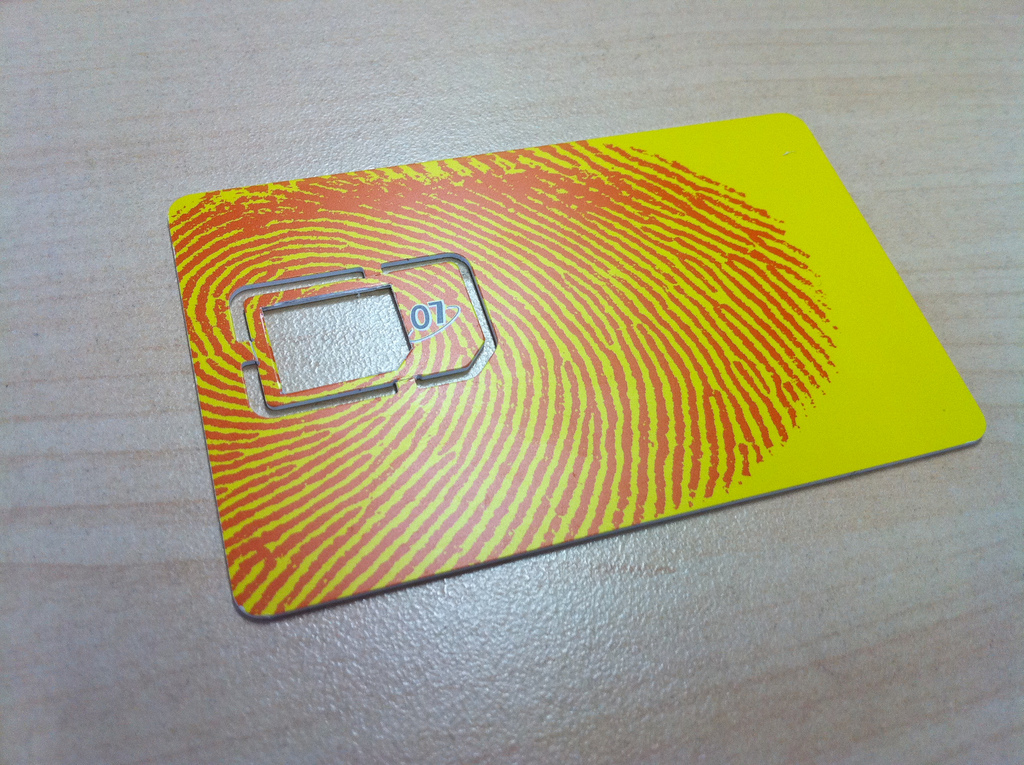
We are developing a global database of SIM cards registrations by country, and we need your help. Please fill out this short survey. We ask you a few questions about a particular country's requirements.
Note: This survey will not track identifying information. We will publish the complete database on the site shortly with the data that we have gathered to date. The survey is here. Thanks!
With the growing use of mobile phones for citizen media comes new risks, challenges and opportunities. This online dialogue is a space to discuss stories, tactics, and resources for using mobile phones for citizen media, as well as a space to discuss mobile risk assessment and security. Jin the discussion on July 27 to share your stories, ideas and resources!
You can find more information on how to participate here.
The Mobile Minute is back with the latest mobile news. What's happening today? Nielsen Wire looks at smartphone penetration in Asia, RIM lays off 11% of its worldwide workforce, CGAP investigates how network operators can incorporate mobile financial services into their operations, [x]Cube Labs turns Android's history into an infographic, and Read Write Web looks into the latest developments in the use of near field communication technology for mobile payments.
Curious about the smartphone market in Asia? Nielsen Wire looks at the rapid growth of smartphones in Asia. Although current smartphone penetration in the region is less than 20%, a Nielsen survey of consumers revealed that nearly half of respondents plan to buy a smartphone within the next year. Nielsen Wire investigates what the anticipated increase in smartphone ownership will mean for how people access the Internet, how network operators will price their data plans, and how mobile advertising will adjust to a new market.
Wired reports that RIM (the makers of BlackBerry devices) announced on July 25th their plans to lay off 2000 employees, roughly 11% of its worldwide workforce. The move comes as RIM has lost market share to the growing popularity of newer operating systems like Apple's iOS and Google's Android.
CGAP's "How to Run with Mobile Money and Not Fall" article examines how mobile network operators can incorporate mobile financial services into their current business models. Some of the advice for successfully incorporating mobile money services includes using multiple distribution methods (such as both on-phone purchases and traditional street airtime sellers) and getting support from/sharing knowledge among multiple departments.
If you like charts and graphs, check out this history of the Android operating system. Covering everything from its founding date (2003), to the Google buyout (2005), to the launch of the first Android device (2008), to present day releases, the infographic maps out each update in Android's development.
Near field communication (NFC) technology allows smartphone users to transmit information to nearby contacts. Read Write Web recently investigated some of the new developments in the NFC field for turning smartphones into credit cards. The first article looks at how the company Isis partnered with four major American credit card companies (Visa, MasterCard, American Express, and Discover) to develop wireless payments. The second article looks at the Jumio payment company's launch of Netswipe, which "turns any webcam into a credit card reader, both on the desktop and on mobile."
[Mobile Minute Disclaimer: The Mobile Minute is a quick round-up of interesting stories that have come across our RSS and Twitter feeds to keep you informed of the rapid pace of innovation. Read them and enjoy them, but know that we have not deeply investigated these news items. For more in-depth information about the ever-growing field of mobile tech for social change, check out our blog posts, white papers and research, how-tos, and case studies.
Mounting interest in the field of mHealth—the provision of health-related services via mobile communications—can be traced to the evolution of several interrelated trends. In many parts of the world, epidemics and a shortage of healthcare workers continue to present grave challenges for governments and health providers. Yet in these same places, the explosive growth of mobile communications over the past decade offers a new hope for the promotion of quality healthcare. Among those who had previously been left behind by the ‘digital divide,’ billions now have access to reliable technology. There is a growing body of evidence that demonstrates the potential of mobile communications to radically improve healthcare services—even in some of the most remote and resource-poor environments.
This report examines issues at the heart of the rapidly evolving intersection of mobile phones and healthcare. It helps the reader to understand mHealth’s scope and implementation across developing regions, the health needs to which mHealth can be applied, and the mHealth applications that promise the greatest impact on heath care initiatives. It also examines building blocks required to make mHealth more widely available through sustainable implementations. Finally, it calls for concerted action to help realize mHealth’s full potential. The report is organized into the following sections:
1. Identifying the potential of mobile phones to improve health in the developing world
2. Defining mHealth within the context of eHealth
3. Meeting health needs through a broad array of mHealth applications
4. Examining the impacts of mHealth projects
5 Assessing mHealth and future health needs in developing countries
6. Identifying the building blocks for sustainable and scalable mHealth programs
7. Understanding the incentives for multiple players: mHealth value chains
Deploying and evaluating a new technology is a major challenge in ICTD research. Introducing new technologies can be hampered by a lack of cultural insight, poor or delayed feedback, and limited evaluation procedures, among other factors.
This short paper offers a model for introducing technology in developing regions that mitigates these factors. We call these steps the “Huzzah method,” inspired by a quotation that rightly derides technology that is introduced from afar and poorly evaluated.
The paper also includes selected portions from other work on Tangaza, whose design, implementation, and analysis followed the Huzzah method.
While researchers are often depicted as either ‘social scientists’ or ‘technologists’ often their educational and ideological backgrounds are much richer than the two simple terms might imply. This paper describes the methodology and approach of a qualitative researcher with a computer science background in investigating how information technology changes communications and information management practices within the health ecosystem constitutued by a health subsidy program in southwest Uganda.
Given the variety of contexts, we found that combining both quantitative and qualitative approaches was the best means of conducting this research.
MobileActive.org interviewed Apala Lahiri Chavan, an expert in Design for Emerging Markets. She is the current Chief Oracle and Innovator of Human Factors International. Through her experience working in the fields of human and computer interaction and user experience with a particular focus on emerging regions, Lahiri Chavan and her team have done cutting edge work in the design of interactive systems. More information about Lahiri Chavan and the work she has done can be found here.
In our interview, Lahiri Chavan talks to us about the importance of paying attention to contextual user needs when designing mobile technologies for users in emerging markets. She started her career as a computer programmer, although soon realized the lack of user-centered research employed in the development of interactive systems. This then motivated her to want to be an ‘advocate for the user’ as she explains in the interview. She wanted to start designing information systems that people could intuitively understand. Her passion to work with people in developing countries is what led her to the field ofContextual Innovation.
Contextual Innovations is a "systematic multidisciplinary process of inquiry into the new frontiers of user system interactions. It allows you to gain practical knowledge about your target markets to develop entirely novel, more useful and effective products and services." The importance of Contextual innovation is that is pay’s special attention to the unique user requirements of developing regions such has high illiteracy rates, multilingualism, and dialectal variation. Lahiri Chavan also also speaks about the importance of engaging citizens of emerging markets in to the design process.
To get a more detailed account of the phrase “Contextual Innovation’’ see Lahiri Chavan video about Design for Emerging Markets. She talks about the design process that must be employed when designing systems and products for users of developing regions. In this animation Lahiri Chavan goes through several processes of design innovations and calls attention to the importance of cross-cultural challenges.