The Power of Social Media in Developing Nations data sheet 1049 Views
Author:
Amir Hatem Ali
Publication Date:
Jul 2011
Publication Type:
Report/White paper
Abstract:
On January 28, 2011, Egypt’s President, Hosni Mubarak, took the drastic and unprecedented step of shutting off the Internet for five days across an entire nation. His reason for doing so was simple: to halt the flow of communication and coordinated assembly taking place over social media platforms, like Facebook and Twitter. That Mubarak took this desperate step — which cost Egypt an estimated $90 million and outraged the international community — demonstrates the incredible power of social media. Mubarak’s decision to shut off the Internet took place after three days of demonstrations by tens of thousands of Egyptians. Although the demonstrations were centered in Cairo’s Tahrir Square (or “Liberation Square”), there were also substantial demonstrations in Alexandria, Mansoura, and Suez. The protesters expressed outrage over several issues, including state corruption, police brutality, and economic oppression. Their demand was clear: President Hosni Mubarak must leave the country.
Various groups, including April 6 Youth Movement, We Are All Khaled Said, National Association for Change, and Kefaya led a coordinated effort using social media platforms, including Facebook and Twitter, to spread a revolutionary message. Prior to the first day of protest, 85,000 Egyptians pledged on Facebook to attend “Revolution Day.” Similarly, April 6 Movement had over 90,000 members during the protests, and We Are Khaled Said had over 40,000 Facebook fans. In the two weeks leading up to and including the first few days of the protest, Egyptians created 32,000 Facebook groups and 14,000 Facebook pages. It is likely that a substantial number of the five million Facebook users in Egypt were in some way encouraged to attend the protests.
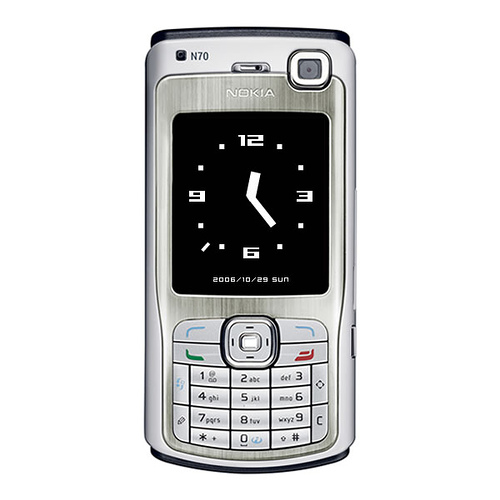
The mobile learning toolkit is the result of research into mobile phone use and user needs within the African context, however it has been developed for use in all developing contexts. It is intended as a “trainer’s toolkit” that can help deliver a wide range of training activities both inside and outside of the classroom.
The mobile learning toolkit is an open source resource that can be used in the delivery of all kinds of training in any context. It has been designed to be as inclusive as possible, with most of the methods requiring only low end devices (basic mobile phones with voice calling and SMS capability). In this way the toolkit can be used to deliver interactive learning experiences to participants right to the Base of the Pyramid (BoP).
Demand Dignity: Amplifying Voices Across Multiple Platforms data sheet 3292 Views
Amnesty International has launched a campaign to amplify the voices of poor people around the world. Demand Dignity is an economic, cultural, and social rights campaign for the organization and the online platform, DemandDignity.org, was launched in May 2009. Since then, the site has collected 57,384 comments, or “voices,” from people around the world, via SMS, Twitter, and on the Demand Dignity website.
The campaign attempts to give a voice to people who are living in poverty or who have had their human rights violated, said Sarah Pyke, communications coordinator of the campaign. It enables people to be able to access their rights, hold their governments to account, and to be able to make their voices heard. These aims led to the creation of the DemandDignity.org platform, an interactive website where people can submit audio, video, or text reports and answer prompted questions such as What does living in dignity mean to you?
One response to this question, from Kenya, was, "living somewhere comfortably in terms of shelter, good health care and having sustainable education."
MobileActive.org spoke with Pyke and with Shehzaad Shams, Project Coordinator for onnline communities and e-activism, to hear more about the platform and how it leverages mobile tech.
How It Works
Shams and Pyke said that Amnesty International wanted to make use of the latest technologies in terms of social media, specifically in how technology could be used to amplify voices. The DemandDignity.org platform itself is available in four languages -- English, Arabic, French and Spanish -- and “voices” can be submitted in any language.
Today's Mobile Minute brings you coverage on African technology use, an interview with txteagle's Nathen Eagle, the 155 millions tweets that are posted on Twitter each day, a look at why technology isn't a panacea, and the future of near-field communication applications for smartphones.
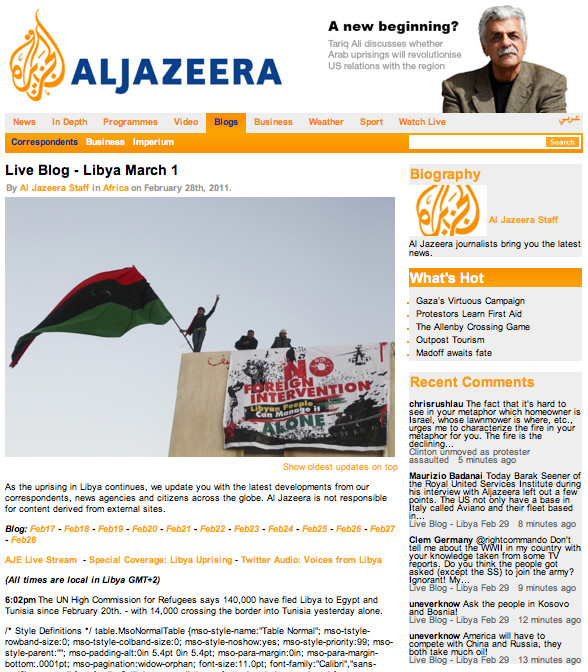
Recent events in Tunisia, Egypt, and Libya have been on the minds -- and on the screens -- of people around the world.
News organizations are covering the events in innovative ways, and people have noticed. More generally, the role of social media itself in protests and revolutions is also being debated. But, as Charlie Beckett writes on his blog, let’s “put aside the silly debate about whether Twitter 'caused' revolution and look instead at how it helped tell the story.” Twitter is just one platform being used to help tell the story, as we see from our conversation with Al Jazeera, one of the most innovative newsrooms in the mix.
The Mobile Minute is back with the latest mobile news. McKesson Foundation's president is interviewed about its $1.5 million grant for m-health research, Zimbabwe begins to roll out per-second mobile billing, NTEN shows non-profits in the United States seven ways to incorporate mobile donations, Apple publishes its guidelines for submissions to the app store, and Twitter releases new figures about their mobile access numbers.
During mobilizations or small protests there is often a hostile environment for protestors. Spread out over the distance of a city there is a lot of information circulating, with no decent way to verify or customize the delivery of that information to individuals with specific requests.
The Tapatio software, along with a general communications infrastructure and team, are able to receive, verify, and dispatch information tailored to the interests of activists in the streets to their mobile phones via SMS.
Tool Category:
Is a web-based application/web service
Key Features :
The following features are all provided by the tapatio software which is a module of the Drupal web platform. As such all of the features of a Drupal system are also available to operators of a Tapatio system.
* Operators, users with access to the Drupal system, associate twitter accounts with organic groups. All tweets from followers of those accounts will automatically get pulled into the drupal system as nodes.
* Communications moderation Operators will then add and moderate posts, voting on them (automatically dispatching at a configureable value), specifying priority levels, associating with other groups (twitter accounts), marking as a duplicate of another post, and dispatching.
* Detailed search / display interface Operators also have the abilty of searching for nodes by minutes since last recieved, wether or not the node has been dispatched, the current vote level, and wether or not the node has been prioritized.
* SMS Dispatching through twitter After a operator deems that a node is valid (ie. it has been verified by an alternate source, it has been assigned a SMS message, and it has been associated with a group) he or she can dispatch it. This is essentially posting the sms message of the node as a tweet for each twitter account (group) that is associated with the node.
English, Drupal base has many translations, but the tapatio mdule still needs translations
Handsets/devices supported:
All SMS capable phones.
Reviews/Evaluations:
There are a few case studies available from the March-Hare communications collective here: http://www.march-hare.org/node/101, http://www.march-hare.org/node/171
Today's Mobile Minute brings you coverage on how mobiles are helping farmers in India, jquery on mobile, a comparison of patterns between mobile and desktop Twitter usage, and a mobile-only magazine.
Camera Phone Images, Videos, Live Streaming: A Contemporary Visual Trend data sheet 2912 Views
Author:
Gaby David
Publication Date:
Mar 2010
Publication Type:
Journal article
Abstract:
Writing for a new media review is like writing history as events unfold. In a short time, this article will be out of date and perhaps no more than a few personal 2.0 snapshots taken of a slice of our lives circa 2009. Nevertheless, it is useful to draw a clear picture of how this medium is being used today, to define some of its emerging social properties, and to document and pay closer attention to its influence on our daily experiences and self-mediations. By self-mediations I refer to how each one of us decides his or her digital imprint: what we post online, whether they are videos, photographs, CVs, and the like. Due to the enormous quantity of content produced by users – now usually called prosumers – we should pay close attention to these doings.
My focus will be on how camera phones affect how news is created and shared, reminding us of how closely the concept of ‘newsworthiness’ is linked to immediacy. Then I will briefly compare the camera phone video experience to the cinematic experience and discuss how film narrative and conventions have affected camera use for better or for worse. Finally, I will pose some open questions that touch on the academic and social value of the camera phone images, and on how contextualising them remains a crucial ingredient in all analysis. I will conclude by considering the visual impact that this handheld object is having on our lives and relationships.
Or: Why the 1 Million T-Shirts x Twitter is the most important thing happening in Tech4Dev on Wednesday, 28 April 2010.
This is how realtime information will inform the future of development work.
A guy came up with an idea: "Let's collect 1 million t-shirts from the US and send them to Africa." Ok. It's an obviously bad idea. It's probably a viral promotion for his own company. It was covered by Mashable on Tuesday the 27th of April. None of this is revolutionary.
The guy social-mediazed his "idea". That's how you go viral. "Hey, twitter, facebook, THE INTERNETS...let's collect 1 million t-shirts...." This is what one does, these days. Make it public, and put it out there. It's an idea for "aid" to "Africa." Why not. It's got a hokey website that said (as of Wednesday, 28 April) "625 shirts collected." Inflamatory. engaging. Also not revolutionary.
Briefing: Twitter against Tyrants - New Media in Authoritarian Regimes data sheet 2544 Views
Author:
Transcript of a briefing. Witnesses: Daniel Calingaert, Nathan Freitas, Evgeny Morozov, Chris Spence, Chiyu Zhou
Publication Date:
Oct 2009
Publication Type:
Other
Abstract:
The Helsinki Commission is an organization monitoring the implementation of the Helsinki Accords, the Helsinki Final Act across 56 participating states. The Commission monitors freedom of media. This briefing considers the ways in which new media and Internet communication technologies affect the balance of power between human rights activists and authoritarian governments. Panelists focus on new media’s role in protests and elections, the ways in which it empowers civil society activists, and the darker side: how dictators use new technology to control and repress their citizens.
UPDATED POST: Mobiles are yet again playing a key role in citizen reporting as terror attacks grip the Indian city of Mumbai. Twitter, the microblogging service that is available in India, was especially instrumental in conveying first hand reports as the chaotic events were unfolding in the city. Twitter users set up aggregator accounts at Mumbai, Bombay, @BreakingNews and with the search tag #Mumbai.
Twitter might tell you what the friend of a friend ate for breakfast or when your cousin is doing his laundry. But, charges Nate Ritter, Twitter is way more than a social networking tool used to communicate the mundane details of everyday life. The mobile phone service has potential -- and in fact, has been used in the past -- for emergency communication and response.
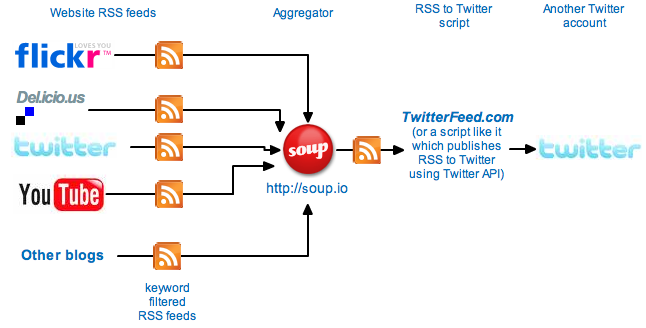
In a series of posts about Twitter for organizations, guest blogger Nate Ritter gives an overview of the benefits and pitfalls using Twitter. And because he is a geek, he's got an aggregator at the ready... (Modified and posted with permission from Nate's blog.)
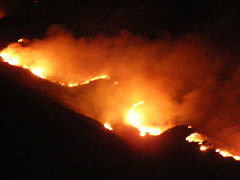
My experiences in the San Diego fires in Southern California in late 2007 gave me an interesting outlook on how Twitter, as a tool, could be applied in different circumstances. For those of you not in the know: Twitter is a "free social networking and micro-blogging service that allows users to send "updates" (or "tweets"; text-based posts, up to 140 characters long) to the Twitter website, via short message service, instant messaging, or a third-party application such as Twitterrific" according to the Wikipedia. Just a few months after (and some even during) the 2007 firestorm some organizations are scratching the surface of what’s possible with this service.
Twitter is a tool. It’s a good one in some cases and and for some organizations, and useless for others. Don’t make Twitter the hammer and start looking at everything like a nail. Twitter does some things very well, but it doesn’t fit every organization’s goals. Here are some considerations that will help determine if Twitter could be useful for your organization. If one of these criteria benefits your community without too many hurdles for adoption, then Twitter might be the right tool for you.