Welcome to a very mobile 2012! Last year mobiles were at the forefront of protests, citizen journalism, disaster recovery and relief, environmental issues, and more – and brought up questions of security and privacy along the way. Check out our new page dedicated to MobileActive's 2011; the Year in Review pulls together our best content from the year in one easy location.
From the launch of The Mobile Media Toolkit (a great resource for reporters, citizen journalists, and media organizations that want to use mobile technology in their work) and our increased focus on security and privacy with the SaferMobile initiative, we've set the groundwork for big changes in 2012.
Keep in contact with MobileActive through Twitter, Facebook, our discuss list, or our newsletters at MobileActive.org and (for all of you reporters and citizen journalists) at the Mobile Media Toolkit. We hope that everyone has a safe and happy New Year, and we are excited for what 2012 holds. Thanks for being part of the MobileActive community!
Beyond ICT4D: New Media Research in Uganda data sheet 674 Views
Author:
Balunywa , Ali, Guido van Diepen, Wouter Dijkstra, Kai Henriquez, Ben White
ISSN/ISBN Number:
9789081
Publication Date:
Jan 2011
Publication Type:
Report/White paper
Abstract:
This paper is a collection of five ethnographic reports examining the role of ICT in Uganda. The first is not particulalrly mobile focused and looks at how those who have access to internet in Uganda use it. The second report is about the ways ICT is changing print media. The third report focuses on the the opportunities ICT present for civil society and non-governmental groups. The next report outlines the way the ICT sector in Uganda was developed. The last report examines ways that ICT may be used in government accountability.
PBS MediaShift is hosting a live chat on Twitter about the use of SMS technology by journalists, news organizations, radio shows and more around the world. In many developing nations Internet access is less prevalent, and the main means of interaction is with mobile phones and SMS. Many projects are using SMS to help connect communities to important news and information, and to create a feedback loop for programs.
The chat takes place on Nov. 2 at 10:30 am PT/1:30 pm ET/6:30 pm CET, hashtag #SMSChat.
MediaShift's executive editor Mark Glaser (@mediatwit) will be moderating the live Twitter chat on SMS use, with these special guests:
Melissa Ulbricht: MobileActive.org and the Mobile Media Toolkit (@MobileMediaKit)
Sean McDonald: FrontlineSMS (@McDapper)
Zach Peterson: Radio Free Europe/Radio Azadi (@zachprague)
How to follow the discussion:
To follow the discussion, please log on to Twitter and search for the #SMSchat hashtag. Glaser will be sending out questions to the guests and audience in the format of Q1, Q2, Q3, and if you want to answer them, please reply with the Q number as well as the hashtag #SMSchat. All participants will need to use the hashtag in every tweet so we can see that as part of the discussion stream.
The discussion will be archived on PBS Idea Lab on Thursday using Storify.
Help us spread the word! We'll make it easy:
If you'd like to tweet about the chat please use this language or something similar: Live Twitter chat about SMS and journalism, with @mediatwit, @MobileMediaKit, @McDapper, @zachprague, 11/2 at 10:30 am PT at #SMSchat
Global Mapping of Technology for Transparency and Accountability data sheet 1368 Views
Author:
Avila, Renata, Hazel Feigenblatt, Rebekah Heacock, and Nathaniel Heller
Publication Date:
Jan 2010
Publication Type:
Report/White paper
Abstract:
As internet and mobile phone use increases, technology is transforming the field of transparency and accountability making it an increasingly dynamic space across the globe. Technology is helping to improve citizen participation in decision-making and producing new ways of identifying public service challenges through processes such as ‘data mashing’.
This paper documents current trends in the way technology is being used to promote transparency in different parts of the world. It reviews over 100 projects from across Africa, Asia, Europe and Latin America, examining how new technologies are re-energising traditional methods. In particular, it focuses on how these new technologies are helping to engage different actors from citizens, media, authorities and the private sector.
Our research finds promising success stories alongside less accomplished examples. The authors argue that a key element of successful technology use in transparency and accountability efforts is their speed – both in execution and in stimulating change. Well-designed efforts produced relevant and usable information that can be used to demand accountability quickly. Technology for transparency and accountability tools need not be sophisticated, but it does need intelligent design that is relevant to the local context. Projects also have a better chance of effectively producing change when they take a collaborative approach, sometimes involving government.
The Mobile Media Toolkit is a new resource site with lots of content about how mobile tech can be used for reporting, news broadcasting, and citizen media.
The Toolkit content is available in English, Spanish, Arabic, and we are translating into Russian as well. We've been adding lots of helpful new content since our launch a few months ago. Here is a sampling:
NEW How-To Guides: The latest is on how to use Bambuzer to live stream content and engage with audiences. Michelle Li of WECT tells us how her newsroom uses Bambuser to share live video and engage with viewers. (And lets us in on what news anchors talk about, off-camera.) Check out the complete guide here.
NEW Case studies, for instance on how to use SMS and radio to engage with listeners in Uganda. No Internet? No problem. Using a new tool called TRAC FM, stations are able to poll listeners via SMS and share the results over the radio. Read the full case study here.
TIPS for the Mobile Journalist, (aka MoJo) such as this video on how to shoot and transfer content from a mobile phone to a tablet using basic hardware and software. For more, check out the Toolkit section on Creating Content (and getting it off) your mobile phone.
ICTs for Democracy Information and Communication Technologies for the Enhancement of Democracy – with a Focus on Empowerment data sheet 693 Views
Author:
Association for Progressive Communications
Publication Date:
Jan 2009
Publication Type:
Report/White paper
Abstract:
Globally, huge investments are made in ICT as an undisputed and essential component of almost all activities – state and corporate. It is also an integral part of international development cooperation. The rapid spread of ICT – particularly the internet and mobile telephony – is making information available instantly and at low cost to a degree unprecedented in history. It can be used to seek, receive, create and impart information by anyone, at any time and for any purpose. The innovative use of the media has created new forms of citizen journalism which give space to a diversity of voices. In this way, ICT enhances freedom of expression and the right to information, and increases the possibilities for citizen´s participation in decision making processes.
This report examines the potential of information and communications technologies (ICTs) for advancing democracy and empowerment, with a special focus on Kenya, Tanzania and Uganda. Access to and the strategic use of ICTs have been shown to have the potential to help bring about economic development, poverty reduction, and democratisation – including freedom of speech, the free flow of information and the promotion of human rights. Based on signs of current democracy deficits in the case study countries, it is crucial that ICTs be made central to development cooperation and to approaches to advance democracy in the three countries.
Across both urban and rural populations, the predominant tool for communication is the mobile phone, while access to the internet is largely limited to urban areas. The high cost of international internet connectivity – itself a consequence of dependence on satellite connectivity in Uganda and Tanzania especially – means that even within urban areas internet connectivity is the purview of a small well-to-do elite.
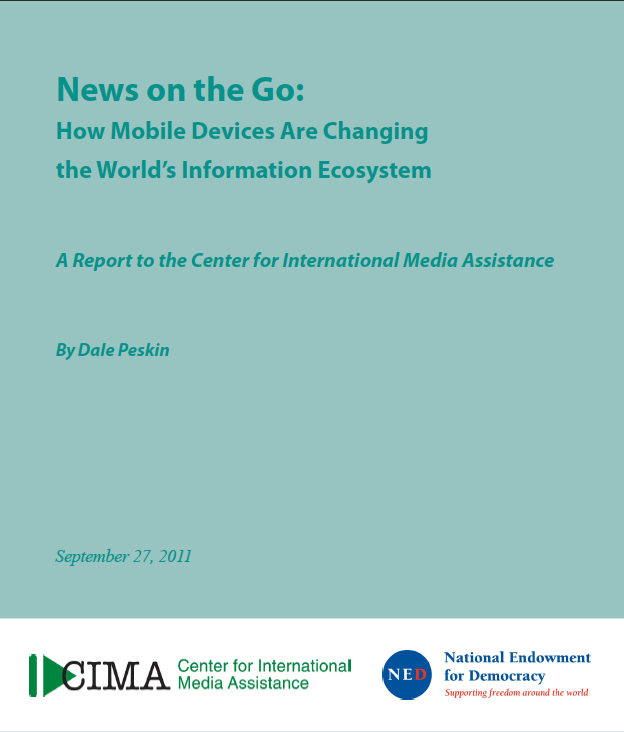
According to the report, at the end of 2010, more than 4 billion people paid for mobile serivce. By the end of this year, about 5 billion mobile phones will be in service in a world with 7 billion people. The report suggests that the implications of so many people having access to phones are many: for politics, for education, for economies, for civil society, and for news and information.
While it offers several examples of mobile case studies in these various issue areas, the report focuses primarily on the growth of mobile Internet, and, hence, high-end smart phones over basic feature phones.
At MobileActive.org and on the Mobile Media Toolkit, we write often about the role of and potential for the basic feature phone. The CIMA report takes the stance that while 5 billion people will have access to mobile phones, by the end of this year “virtually every phone sold” will be a more high-end device.
Bad Services? Holding Officials Accountable with SMS, Radio, and TRAC FM data sheet 2342 Views
A recent radio poll at Sanyu FM in Kampala, Uganda, asked listeners what area of service delivery should be a priority: healthcare, education, security, sanitation, or transport. Using a new tool, TRAC FM, the station was able to solicit comments via SMS from listeners, discuss the issue on the air, and create and post online visualizations of the responses. The station received 103 SMS responses which showed that healthcare was the major concern for listeners, which accounted for 65% of responses.
With help from Text to Change and in partnership with local media organizations, TRAC FM provides citizens in Uganda with a platform to monitor, scrutinize, and discuss public service issues via SMS, radio, and online data visualizations. It does this via the TRAC FM software, a tool for Ugandan radio stations that is partially built on RapidSMS, an open source platform originally developed by UNICEF.
TRAC works in countries affected by poverty and conflict. Its sole purpose is to improve the welfare of people by enabling them to make informed choices and to hold their leaders accountable. TRAC gathers data to enhance transparency and informs people by unleashing the power of mobile communications.
Mobile Media Services at Sub-Saharan African Newspapers data sheet 1446 Views
Author:
Kristina Bürén
Publication Date:
Aug 2011
Publication Type:
Report/White paper
Abstract:
Published by the World Association of Newspapers and News Publishers (WAN-IFRA) and the African Media Initiative (AMI), this guidebook aims to help African newspapers implement mobile platforms.
Billed as a guidebook, and not a one-size-fits-all rulebook, the guide aims to help Sub-Saharan African news publishers develop and implement mobile services. The report is based on a series of on-site interviews with newspapers in Uganda, Kenya, and South Africa, including The Observer and the Daily Monitor in Uganda, The Standard and the Daily Nation in Kenya, and Grocott's Mail, Mail & Guardian, Avusa Group, and News24.comin South Africa.
See also this blog post with more information on the guidebook.
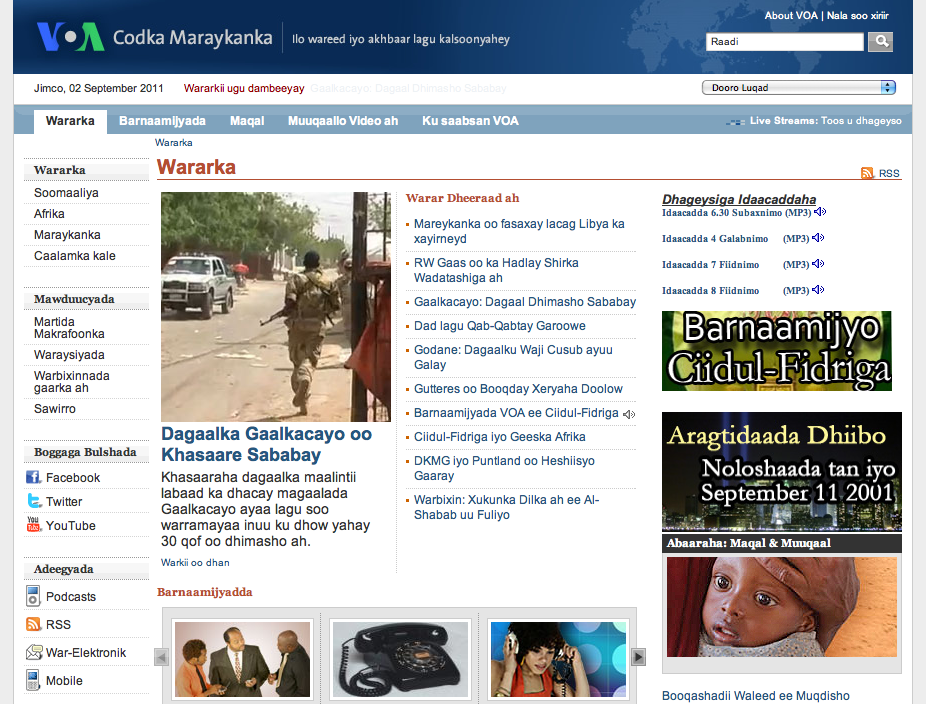
Somalia is suffering through its worst drought in 60 years, and people are fleeing the famine and conflict. A large number of Somalians already live in diasporas across Africa, Europe, and North America. A new service from Voice of America’s Somalia Service and AudioNow makes it easier for Somalians in the United Kingdom to listen to coverage of the drought and other audio news updates, via a basic mobile phone.
“You have a well-educated, motivated, and mobile population that is willing to dial up and listen to radio broadcasts on their mobile phones,” said Steven Ferri, Web Managing Editor of VOA in Africa.
uReport: Citizen Feedback via SMS in Uganda data sheet 3481 Views
For aid organizations, knowing what local communities and beneficiaries want and need is the key to running successful, sustainable programs. In Uganda, UNICEF is using mobile phones and broadcast media to get direct feedback from Ugandans on everything from medication access to water sanitation. The project, called uReport, allows users to sign up via a toll-free shortcode for regular SMS-based polls and messages. Citizen responses are used both in weekly radio talk shows to create discussion on community issues, and shared among UNICEF and other aid organizations to provide a better picture of how services work across Uganda.
Sean Blaschke, a Technology for Development specialist at UNICEF Uganda, explains that uReport gathers information from participants and informs citizens of their rights and available services. Recent polls have included questions about school dropouts, water point availability, mosquito net usage, and youth employment, all collected via SMS polls.
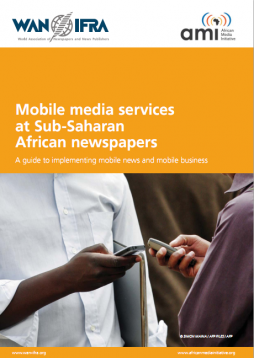
A just-published guide from the World Association of Newspapers and News Publishers (WAN-IFRA) is all about making media mobile, specifically at newspapers in Sub-Saharan Africa. The full report is available for download here.
Billed as a guidebook, and not a one-size-fits-all rulebook, the guide aims to help Sub-Saharan African news publishers develop and implement mobile services. The report is based on a series of on-site interviews with newspapers in Uganda, Kenya, and South Africa, including The Observer and the Daily Monitor in Uganda, The Standard and the Daily Nation in Kenya, and Grocott's Mail, Mail & Guardian, Avusa Group, and News24.com in South Africa.
Though the primary audience of the guidebook is media managers, there are lessons and tips for anyone interested in the current state of and potential future for mobile print media in Sub-Saharan Africa.
We would have wished that there was a greater focus on online media as the guide is almost entirely focused on print. Given the fast growth of online media outlets in a number of African media markets, this is an unfortunate limitation.
At the same time, the guide provides a detailed landscape of mobile telephony in Africa, including usage and infrastructure and access points (including SMS, mobile Internet and data, Sim Tool Kit, USSD, voice and interactive voice response). See explanations and examples of these access points in the Mobile Media Toolkit Glossary, here.
MobileActive.org recently launched the Mobile Media Toolkit, a resource for professional journalists and citizen reporters who want to use mobile phones to create and share news about the world around them. If you want to learn more about using your phone as a media tool, the Mobile Media Toolkit has guides, how-tos, and real-world case studies that can help you learn the best tips, tricks, and tools for mobile reporting.
One of the sections of the Mobile Media Toolkit focuses on creating content – using a mobile phone for photography, audio, and video recording. The section focuses on basic feature phones and smartphones, so the content is applicable to a large number of users.
Creating Audio:
Mobile phones, as an audio medium, are excellent tools for creating audio content. From radio broadcasts, to podcasts, to audio slideshows, anyone can use a mobile phone for audio reporting. In order to use a phone for audio reporting, users can do any of three things:
Use the calling function of the phone to leave an audio message on a service that records your call.
Record audio directly onto your phone through its microphone.
Use software or applications to record phone conversations.
While creating audio, it's important to have a good recording environment, which means minimal background noise and ambient sound (such as from air conditioners or fans in a room, or traffic in outdoor settings). Using an extrenal microphone (rather than the built-in mic on the phone) can help cut down on ambient noise as it picks up sound more directly. For recording phone calls, you should warn your interviewee first, as in many states and countries, it is legally required to tell someone before recording them.
Using mobile phones to record audio is simple and sharable, and should be a skill in the repetoire of any mobile journalist. The Mobile Media Toolkit has much more information on recording on audio, including how to edit audio, how to publish and share it, and case studies on how different organizations around the world are using mobile audio reports.
Creating Video:
Videos are a great way to document the world around you, and the ubiquity of mobile phones with video capabilities means that the opportunity for journalists and citizen reporters to capture great video is always growing.
Creating good videos off a mobile phone can add a dynamic boost to news reports, or present a stand-alone story. When recording video, try to some of the Mobile Media Toolkit's advice for creating videos:
Hold the phone in landscape mode (held horizontally rather than vertically) while recording; most online video players are designed for landscape videos, so filming in this format means you'll get the most from the scene.
Keep the camera stable; stability is key for smooth video. Use a tripod if you have one, if not, then steady your arms on something solid or film in a sitting or kneeling position.
Use an external microphone for better sound quality.
Check the lighting. If you're filming outside, keep the sun behind your subject; if filming inside, then make sure your subject is lit from multiple angles to avoid shadows.
Film on the highest resolution you have available – if you are not directly uploading/live-streaming the video from your mobile phone, you can always compress the video later on a computer when editing if you need a smaller file size.
There are several options for editing mobile videos; some phones (like the iPhone and the Nokia N series) have built-in editing packages, and smartphone users with iPhones or Windows phones can download third party editing applications. Users can also upload the videos to a computer for richer editing options.
Taking Photos:
Much of the advice for taking pictures is similar to the advice for taking good videos:
Make sure you have lots of light on your subject to compensate for the small phone lens.
Keep your phone stable in order to reduce blur.
Keep the lens clean. The lens on camera phones can get dirty quickly as it is often less protected then the lens on a traditional camera. Remove dirt and debris so that your pictures aren't marred.
Try not to use the zoom on the camera; photos will be in a higher resolution if you move in to take the picture or later crop the photo in photo editing software.
The section also has information for reporting from smartphones, covering everything from how smartphones can be used for live and semi-live reporting, social media applications, personal management (such as taking notes, recording calls, or scheduling interviews), and a summary of applications for a variety of handsets (Symbian, RIM, Android, iPhone, and Windows).
To learn more, check out the Mobile Media Toolkit for more information on creating, editing, and sharing content with your mobile phone.
The Mobile Media Toolkit helps you make sense of the growing role of mobile tech in media. The Toolkit provides how-to guides, mobile tools, and case studies on how mobile phones can (and are) being used for reporting, news broadcasting, and citizen media. We cover it all, from basic feature phones to the latest smartphone applications.
It's an exciting day for us here at MobileActive.org as we launch the Mobile Media Toolkit. For the last year we have been interviewing people, researching projects, and testing tools, to bring you this free resource. It is designed to help you evaluate and effectively deploy the right tools for reporting and sharing content on and to mobile devices.
Please visit the Toolkit. Share it with others. Add to it! It's available in English, Spanish, and Arabic. So, please join us and say Welcome, Bienvenidos, and مرحبا to the Mobile Media Toolkit!
We spoke with Prairie Summer and Graham Gardner of Equal Access to learn more about that organization’s work integrating educational radio broadcasts with mobile-based tools such as SMS and IVR. As they explain, this combination has enabled them to better tailor their message to their their audience and has allowed for a unique form of interactive communication.
Equal Access creates communications strategies and outreach that address the most critical challenges affecting people in the developing world. Their work has focused on communications around issues such as women and girls' rights, democracy and governance, and education.
When it comes to water, every drop counts. When a local waterpoint malfunctions or dries up, it’s important to get the problem resolved as quickly as possible. That’s where Maji Matone, a water monitoring and civic participation project in Tanzania, comes in.
Run by Daraja, a Tanzania-based NGO, Maji Matone asks villagers to report outages in their water systems via SMS. Daraja employees read through the SMSs, then pass along the information to the local district engineer. The project is currently being piloted in three different districts. Each district has a local engineer responsible for the water infrastructure. If reports continue to come in and no action has been taken, Maji Matone turns to its media partners in order to publicize the lack of action.
In Tanzania Media, Speak Up and Be Heard data sheet 2233 Views
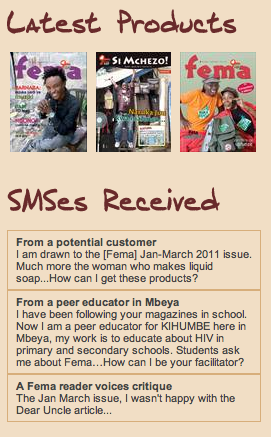
For the largest civil society media platform in Tanzania, back talk is good.
In fact, talking back is the objective of a new service at Femina HIP called Speak Up! The service aims to increase access of marginalized youth and rural communities and promote a participatory, user-driven media scene in Tanzania.
Femina HIP is the largest civil society media platform in the country, outside of commercial mainstream media. Products include print magazines, television shows, a radio program, and an interactive web site. Fema magazine, for example, has a print run of over 170,000 copies and is distributed to every rural region in the country.
Mobile Africa Report 2011: Regional Hubs of Excellence and Innovation data sheet 2030 Views
Author:
Rao, Madanmohan
Publication Date:
Mar 2011
Publication Type:
Report/White paper
Abstract:
According to industry estimates, there are more than 500 million mobile phone subscribers in Africa now, up from 246 million in 2008. In 2000, the number of mobile phones first exceeded that of fixed telephones. Africans can accelerate development by skipping less efficient technologies and moving directly to more advanced ones.
The telecommunications sector continues to attract a flurry of public and private investment from foreign sources and local banks, but the investment should be in software and services, not just cabling infrastructure.
Recent events in Tunisia, Egypt, and Libya have been on the minds -- and on the screens -- of people around the world.
News organizations are covering the events in innovative ways, and people have noticed. More generally, the role of social media itself in protests and revolutions is also being debated. But, as Charlie Beckett writes on his blog, let’s “put aside the silly debate about whether Twitter 'caused' revolution and look instead at how it helped tell the story.” Twitter is just one platform being used to help tell the story, as we see from our conversation with Al Jazeera, one of the most innovative newsrooms in the mix.
How to Add Location Information to Mobile Content data sheet 5734 Views
Author:
Melissa Ulbricht
Abstract:
This how-to focuses on the tools and techniques that you can use to add location-based information to mobile content.
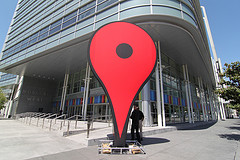
Location information can add value to your stories and content and can help journalists who report on specific communities, reporters who create venue-specific multimedia, or citizen journalists who cover events in which location is relevant.
Location information has many advantages: It provides more context. It helps journalists and publishers find an interested audience; users searching for information around specific locations will most easily find information that is tagged with a location. Location information lends itself to aggregation; content with location information can be put on maps and other visualizations, which makes it more appealing for audiences to examine. Through this, it can be used in pattern-finding. Aggregations may show interesting patterns that would not be evident from individual reports. Finally, location information can leverage social media.
Regulatory Independence and Wireless Market Development: A Comparative Analysis of Two African Nations data sheet 1175 Views
Author:
van Gorp, Annemijn F. & Carleen F. Maitland
Publication Date:
Jan 2009
Publication Type:
Report/White paper
Abstract:
This study analyzes the nature of regulatory independence and its influence on wireless market development in Tanzania and Botswana. The study finds that the level of regulatory independence is associated with improved market conditions. The research has implications for theories of regulation and market development in low income countries.
In particular the Tanzania case suggests that the independence of regulation can have secondary effects such as diversity of technologies and faster transitions to advanced technologies, while the reversal of independence in Botswana highlights the need for greater insights into the under-theorized dynamic nature of regulatory independence.
Women & Mobile - A Global Opportunity: A Study on the Mobile Phone Gender Gap in Low and Middle-income Countries data sheet 2168 Views
Author:
GSMA Development Fund
Publication Date:
Jan 2010
Publication Type:
Report/White paper
Abstract:
Mobile Phone ownership in low and middle-income countries has skyrocketed in the past several years. But a woman is still 21% less likely to own a mobile phone than a man. This figure increases to 23% if she lives in Africa, and 37% if she lives in South Asia. Closing this gender gap would bring the benefit of mobile phones to an additional 300 million women. By extending the benefits of mobile phone ownership to women, a host of social and economic goals can be advanced.
Mobile phone ownership provides distinct benefits to women, including improved access to educational, health, business and employment opportunities. Women surveyed across low and middle-incoome countries on three continents believe that a mobile phone helps them lead a more secure, connected and productive life.
From January 9th to January 15th, Southern Sudan held a referendum to decide if the region should become independent from North. Although results have not yet officially been announced, estimates indicate that the referendum will pass with an overwhelming number of pro-independence votes. During this time, keeping citizens informed of new developments is crucial, and one of the best ways to reach large numbers of people is through the radio. The Sudan Radio Service, which has been operating since 2006, recently began incorporating mobile technology into its work to both monitor the reach of its broadcasts and to solicit reader feedback.
The radio station WNYC is creating on-air and online stories from two things very familiar to people in the Northeastern United States: mobile phones and snow. A snowstorm over the holidays was the heaviest December snowfall in six decades and dumped up to 20 inches in many parts of New York City. The story quickly became one of snow removal and how the city was not removing the snow as quickly as people had hoped.
Jim Colgan and the WNYC newsroom wanted to get a sense of what was happening on the streets. Problem was, there was no good or easy way to do this. The station couldn’t rely on the city for real-time information, and reporters couldn’t get to many of the areas. The answer was to have the listeners share their own reports and stories, via mobile phone.



_0.jpg "MMTK_01 (3).jpg")
.jpg "MMTK_01 (3).jpg")
 For the largest civil society media platform in Tanzania, back talk is good.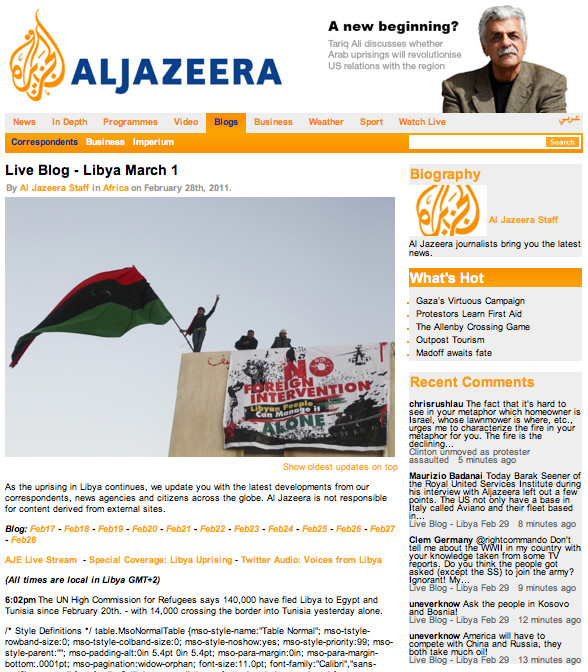
 Location information can add value to your stories and content and can help journalists who report on specific communities, reporters who create venue-specific multimedia, or citizen journalists who cover events in which location is relevant.